What Is an Ordered Sequence: Definition and Meaning
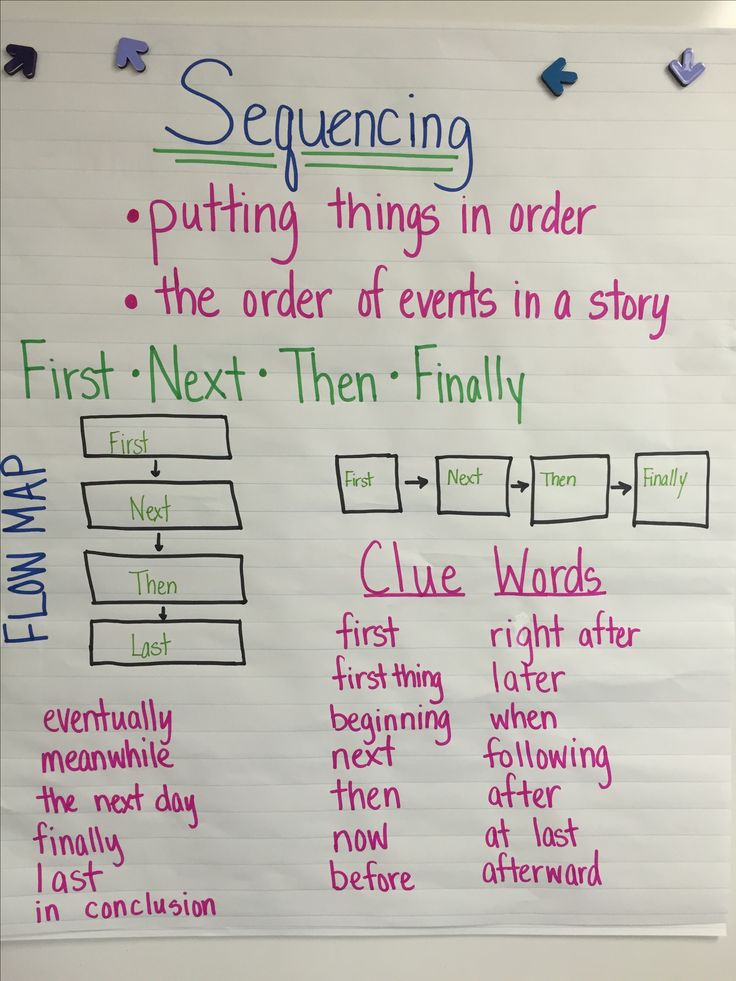
An ordered sequence is simply a list of items in a specific, deliberate arrangement where position matters. In everyday life, you follow ordered sequences whenever you line up for coffee, follow a recipe, or read the pages of a book from start to finish.
In mathematics and computer science, this concept becomes a formal tool for describing how elements relate to one another based on their place in the structure. Understanding what is an ordered sequence allows you to grasp how data is organized, processed, and stored across countless digital and physical systems.
Core Characteristics That Define Order
The defining feature of an ordered sequence is that each element has a distinct position relative to the others, creating a clear progression from first to last. This inherent ranking means that even if two collections contain the same items, they can represent completely different sequences if the order changes.


Another critical aspect is that positions are usually numbered starting from one or zero, depending on the context. This indexing lets you pinpoint exactly where an item resides within the structure, enabling precise access and manipulation of data in algorithms and software design.
Position And Indexing
Position refers to the logical place of an element within the entire chain of items, independent of physical layout in memory. Indexing provides a concrete way to refer to that position using numbers, which computers translate into efficient lookup and operations.


For example, the sequence of letters in the word "cat" follows a specific order where "c" is at index zero, "a" at index one, and "t" at index two in many programming languages. This simple idea scales to massive datasets, driving search, sorting, and analysis tasks.
Length And Bounds
Every ordered sequence has a length, which is the total count of elements it contains. Knowing the length helps you understand the boundaries of the structure, defining the first valid index and the index just past the last element.
These bounds are essential for iterating through the sequence safely without overstepping the available data. They also play a key role in validating inputs and ensuring that algorithms behave predictably when processing user data or external feeds.


How Ordered Sequences Are Used In Practice
In programming, arrays and lists are common implementations of this concept, providing a straightforward way to store and retrieve related values. Databases also rely on ordered structures when you sort records by date, name, or ID to present consistent and meaningful results.
Outside of technology, you encounter ordered sequences whenever you follow a timeline of historical events or complete steps in a manufacturing process. Recognizing this pattern helps you communicate clearly and design systems that respect the natural flow of tasks.
Data Storage And Retrieval
Computer memory often organizes information in contiguous blocks to take advantage of spatial locality, making access faster. By storing elements one after another, hardware and software can predict and preload the next pieces of data you might need.



Caching strategies, pagination in web applications, and streaming services all depend on this sequential arrangement to balance speed, resource usage, and user experience. The order determines not only what you see but also how efficiently systems can deliver it.
Sorting And Searching
Many algorithms focus on rearranging elements into ascending or descending order to enable faster searches. Once a sequence is sorted, techniques like binary search can locate items in logarithmic time instead of scanning every entry.
This principle is behind autocomplete features, product rankings, and financial calculations where finding the right value quickly is crucial. Maintaining a logical order reduces computational overhead and improves the responsiveness of complex applications.
Theoretical Foundations And Examples
In formal logic and set theory, an ordered sequence extends the idea of a set by adding the notion of succession. While a set cares only about membership, a sequence encodes how elements appear one after another.
This distinction becomes obvious when comparing the unordered pair {a, b} with the sequence (a, b), which is fundamentally different from (b, a). Such distinctions underpin how functions, mappings, and even cryptographic protocols are defined and analyzed.
Mathematical Notation And Properties
Mathematicians typically denote finite sequences with parentheses and indices, such as (x_1, x_2, ..., x_n), where the subscript indicates position. This concise notation supports rigorous proofs and clear communication across disciplines.
Properties like monotonicity, periodicity, and convergence describe how the values in the sequence evolve. These characteristics are vital for modeling phenomena in physics, economics, and machine learning, where past states inform future behavior.
Real World Applications
Navigation systems use ordered sequences of coordinates to plot routes, ensuring that each turn follows the previous one in the correct order. Music playlists, video streaming buffers, and task scheduling queues all operate on the same basic principle.
By respecting the intended progression, these systems minimize delays, avoid conflicts, and provide a seamless experience. Recognizing the role of structure in these scenarios helps you build better tools and anticipate edge cases before they become problems.
Grasping what is an ordered sequence empowers you to reason about patterns, design efficient processes, and communicate ideas with precision across both technical and everyday contexts.
Related Articles

What Is a Dooryard: Definition and Meaning
A dooryard is the patch of ground right outside a home's entrance, a small transitional space that ties the interior of the house to the broader landscape...

What Is a Lanai: Meaning, Definition, and Hawaiian Origins
When you encounter the word lanai, you might picture a relaxed space where indoor comfort meets outdoor beauty. In Hawaiian life and broader real estate...

What Is the Meaning of Spontaneous in Chemistry Definition Explained
In chemistry, the phrase spontaneous refers to a process that can occur on its own without needing a continuous external push. Understanding what is the...

Understanding What Is a Urban Background: Definition and Meaning
An urban background is the layered visual and sensory environment that surrounds people in cities and towns, shaping how they navigate, interpret, and feel...

What Is a Lanai? Definition and Meaning
Understanding what is the definition of a lanai starts with recognizing it as a distinct architectural feature that blends indoor comfort with outdoor living...

Understanding Spontaneous Reaction Meaning Definition and Examples
Understanding what is the meaning of spontaneous reaction begins with recognizing how often this term appears outside the laboratory, describing everything...