What Is a Tangram Puzzle: History, Benefits, and How to Solve
A tangram puzzle is a classic dissection puzzle that originated in China and has fascinated children and adults for centuries with its simple yet challenging design. It consists of seven flat polygons, known as tans, which must be arranged to form a specific shape without overlapping any pieces. This deceptively straightforward concept has made it a staple in classrooms, living rooms, and brain training regimens around the world. The puzzle invites players to explore geometry, spatial reasoning, and creativity through hands-on manipulation.
At its core, the tangram is an educational tool disguised as a game, offering a tactile experience that bridges the gap between abstract mathematical concepts and physical problem-solving. The set includes five triangles of varying sizes, one square, and one parallelogram, all derived from a single square cut according to a precise pattern. These seven pieces can be combined in thousands of different ways, creating an almost infinite variety of challenges that have stood the test of time.
Origins and Historical Development
The exact origins of the tangram are shrouded in legend, but most historical accounts trace its roots to ancient China, with stories dating back to the Song Dynasty. Over time, it spread to Europe and America, becoming a popular parlour game in the 19th century. Its enduring appeal lies in its simplicity, requiring no batteries, screens, or complex instructions to provide hours of engaging entertainment.


The puzzle’s journey from a Chinese manuscript known as "The Book of Wisdom" to a global phenomenon highlights its universal appeal. Educators quickly recognized its value, incorporating it into lessons to teach concepts ranging from basic fractions to complex geometric proofs. The tangram’s ability to adapt to different skill levels ensures it remains relevant for beginners and experienced puzzlers alike.
Ancient Chinese Roots
Legends suggest that the tangram was created by a wise philosopher or mathematician who wanted to illustrate a geometric principle in a tangible way. Early versions were often carved from wood or painted on silk, transforming the puzzle into an art form. This historical connection to ancient problem-solving techniques adds a layer of depth that continues to intrigue historians and hobbyists.


The original Chinese name, "Ch'i ch'iao t'u," translates to "seven boards of skill," emphasizing the dexterity required to master the challenge. This focus on skill and precision laid the foundation for the puzzle's reputation as a tool for developing mental agility and hand-eye coordination.
Spread to the Western World
By the late 18th century, the tangram had reached Europe, where it was marketed as a new and exciting puzzle. It arrived in America shortly thereafter, captivating the public with its endless possibilities. Newspapers of the era frequently featured complex silhouettes for readers to solve, turning the tangram into a popular competitive pastime.
The Western adaptation often included detailed booklets with illustrations, guiding players through increasingly difficult patterns. This structured approach helped standardize the puzzle, ensuring that the same seven pieces were used universally, a practice that continues today.


Educational and Cognitive Benefits
Beyond its entertainment value, the tangram serves as a powerful educational instrument that supports cognitive development in learners of all ages. Teachers frequently use the pieces to demonstrate geometric transformations such as translation, rotation, and reflection. The puzzle naturally encourages experimentation, allowing players to test hypotheses and refine their understanding of spatial relationships through trial and error.
The process of solving a tangram puzzle engages multiple areas of the brain, promoting logical thinking and creative problem-solving. Children, in particular, benefit from the puzzle’s hands-on nature, as it helps them visualize abstract concepts like symmetry and congruence. This makes the tangram an invaluable resource for homeschooling parents and educators looking to make math lessons more interactive and enjoyable.
Spatial Reasoning Skills
One of the most significant advantages of playing with a tangram is the improvement of spatial reasoning. Players must mentally rotate and flip the tans to fit them together, which strengthens their ability to visualize objects in different orientations. This skill is not only essential for advanced mathematics and engineering but also plays a role in everyday tasks like navigating physical spaces or interpreting diagrams.
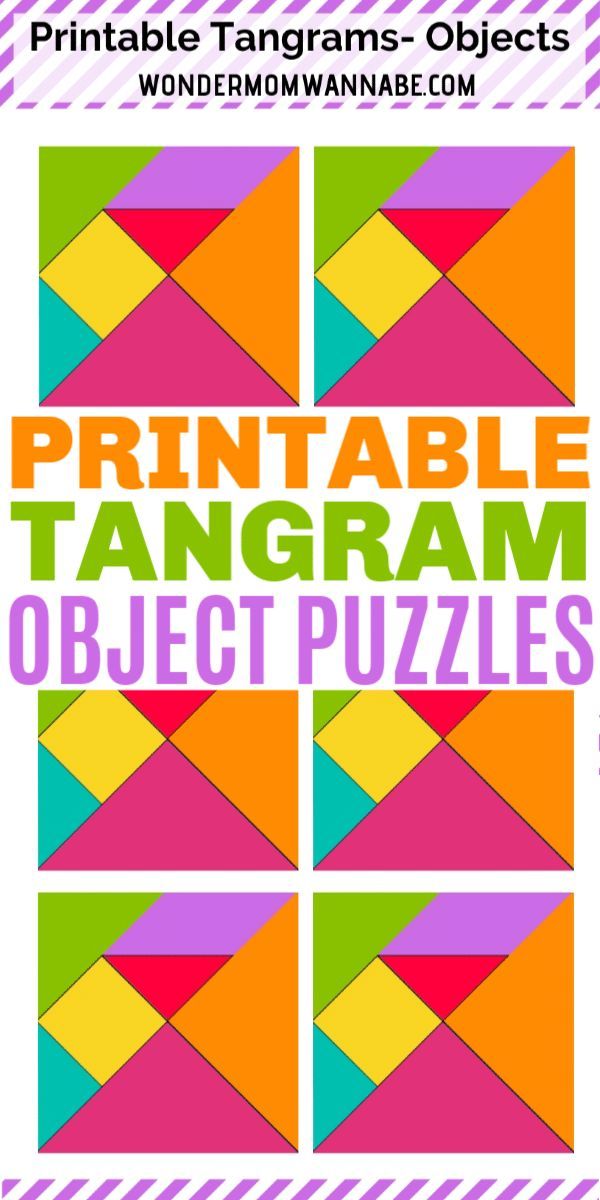


Regular practice with the puzzle can enhance memory and concentration, as solvers work to recall patterns and strategies. The immediate feedback provided by the pieces snapping into place reinforces learning and builds confidence. This makes the tangram an excellent tool for both individual study and collaborative group activities.
Creativity and Open-Ended Play
While many tangram challenges come with predefined silhouettes, the pieces can also be used for freeform creation. Players are encouraged to invent their own shapes, animals, and objects, which fosters artistic expression and imagination. This open-ended play is crucial for developing divergent thinking, a skill associated with innovation and out-of-the-box solutions.
Artists and designers have historically drawn inspiration from the tangram’s geometric simplicity. The puzzle demonstrates how a few basic shapes can combine to form complex and beautiful patterns, bridging the gap between mathematics and art. This creative potential ensures the tangram remains a versatile tool for exploration.
Modern Applications and Variations
In the digital age, the tangram has evolved beyond its physical origins, appearing in countless apps, video games, and virtual puzzle platforms. These modern versions often include hints, timers, and vast libraries of challenges, making the puzzle more accessible than ever. Technology has expanded the reach of the tangram, allowing people to practice on the go and connect with other solvers online.
Despite these innovations, the core mechanics remain unchanged, proving the brilliance of the original design. Educators now integrate digital tangrams into interactive whiteboard lessons, while therapists use them in cognitive rehabilitation programs. The puzzle’s adaptability ensures it continues to find new audiences and applications across various fields.
Whether you are a teacher looking to engage your students, a parent seeking screen-free fun, or an individual eager to keep your mind sharp, the tangram offers a timeless experience. Its blend of simplicity and depth guarantees that there is always a new challenge to discover. Embracing this ancient puzzle means embracing a journey of continuous learning and delightful discovery.
Related Articles

What Is a Mesh Fence: Benefits, Types, and Installation Tips
A mesh fence is a versatile outdoor barrier constructed by weaving wire strands into a consistent grid pattern of open spaces. This design creates a structure...

What Are Barefoot Shoes Used For: Benefits & Guide
Barefoot shoes are designed to mimic the experience of walking while still providing a thin, protective layer between your feet and the ground. These...

What Is a Single Pane Window: Benefits, Cost & Installation Tips
A single pane window is exactly what the name implies, a window assembly that uses just one sheet of glass to separate the interior of a building from the...

What Is a Garden Peace Pole Meaning Benefits and Message
A garden peace pole is a striking and meaningful object designed to serve as a constant reminder of hope, unity, and harmony within outdoor spaces. These...

What Was the First Pet for Humans? Uncovering History
The question about what was the first pet for humans opens a window into the deep partnership between our species and the animal kingdom, tracing back to the...

Silence The Nightsong Puzzle SEO Tips
Players often ask what can silence the nightsong puzzle when the ambient chorus of crickets and distant owls drowns out the subtle audio cues that guide their...