Stunning Backyard Putting Green Landscape Ideas For A Pro Look
Creating a backyard putting green transforms your outdoor space into a personal sanctuary where you can practice your stroke any day of the week. This landscape idea blends functionality with luxury, giving you a quiet retreat just steps from your back door. Whether you have a sprawling yard or a modest balcony, the right design turns an unused corner into a focal point of enjoyment. The goal is a smooth, realistic surface that feels like a true course while fitting seamlessly into your existing lawn or garden.
Homeowners are increasingly looking for ways to bring golf course style luxury into their own yards, and a well planned putting landscape is the perfect way to achieve that. It is not just about dropping a cup in the grass; it is about crafting a strategic surface that challenges your aim and sharpens your skills. From rolling characteristics to subtle breaks, every detail matters when designing a space that truly replicates the feel of the game. The result is a durable, attractive feature that becomes the centerpiece of outdoor gatherings and solo practice alike.
Designing the Green Shape and Location
The shape of your backyard putting green should work with the natural lines of your yard rather than fight against them. Curved edges often feel more organic and allow the grass to flow into the surrounding landscape. You can opt for a simple circle, a figure eight, or a narrow ribbon that winds between shrubs, depending on your space and style. Choosing a location with gentle, consistent slope toward a drainage point helps water move away and keeps the surface firm and playable.


Consider how you will access the green on a daily basis, as frequent use means the path will show wear over time. A clear, stable walkway or a stepping stone path keeps the edges of the green clean and prevents soil compaction from foot traffic. It is also wise to position the green where morning sun and afternoon shade balance out, protecting the surface from harsh drying or excess moisture. Thoughtful layout at this stage reduces future maintenance and keeps the area looking polished year round.
Edge Treatments and Borders
Defining the border of your putting area keeps the grass contained and gives the design a polished, intentional look. Low concrete curbs, stacked stone, or metal edging create a sharp line that separates the green from the surrounding lawn or mulch beds. These borders also help retain the specialized surface material, whether that is compacted sand, synthetic fibers, or true bentgrass, preventing it from spreading into garden beds.


For a softer aesthetic, you can use mounded soil, tight clusters of ornamental grass, or a narrow gravel strip to suggest the edge without hard lines. The key is consistency, so choose one border style and repeat it around the perimeter to unify the space. Strong edge treatment reinforces the geometry of the green and signals to anyone walking through the yard where the putting area begins and ends.
Surface Choices and Slope Strategy
The surface material is the most important factor in how your backyard putting green feels and performs. Natural grass options like bentgrass or Bermuda give the most authentic roll, but they demand consistent watering, mowing, and fertilizing. Synthetic turf has advanced dramatically, offering a uniform, low maintenance surface that mimics real grass without the intensive care schedule. Paver systems with small gaps filled with sand or fine aggregate are another choice, providing firm, predictable ball roll and excellent drainage.
Slope is the element that creates break, the subtle curving of the ball as it slows toward the cup. On a beginner green, a one to two percent slope toward the center or a side drain keeps water moving and prevents pooling. More advanced designs use subtle crowned tops or gentle side leans to create undulating contours that reward skilled reading of the green. Planning slope from the start ensures that your landscape feels fair, challenging, and enjoyable for players of every level.


Drainage and Base Layers
A properly built base is what keeps your backyard putting green stable, level, and drainable over time. Under the surface material, a layer of compacted crushed stone allows water to flow away from the playing area and prevents soft spots. Geotextile fabric between the stone and native soil stops fines from working upward and clouding the base. Without adequate drainage, even the best surface material can develop ruts, uneven spots, or moss, so this hidden layer deserves careful attention.
For sloped yards, you can use the natural grade to create a gentle cross slope that moves water off the green and into a dry well or rain garden. Raised islands or mounds placed strategically add visual interest while breaking up long, flat runs. Thoughtful drainage and base design mean your landscape remains playable after heavy rain and does not turn into a muddy patch that disrupts your practice rhythm.
Integrating Greens into Existing Landscape
Your backyard putting green does not have to sit alone in an empty corner; it can weave through beds, pathways, and seating areas like a design thread. Use the green to tie together different zones of the yard, guiding the eye from the patio to the garden and back again. Low hedges, ornamental grasses, or dwarf conifers planted at the perimeter act as living walls that frame the surface and give it definition without blocking sightlines.


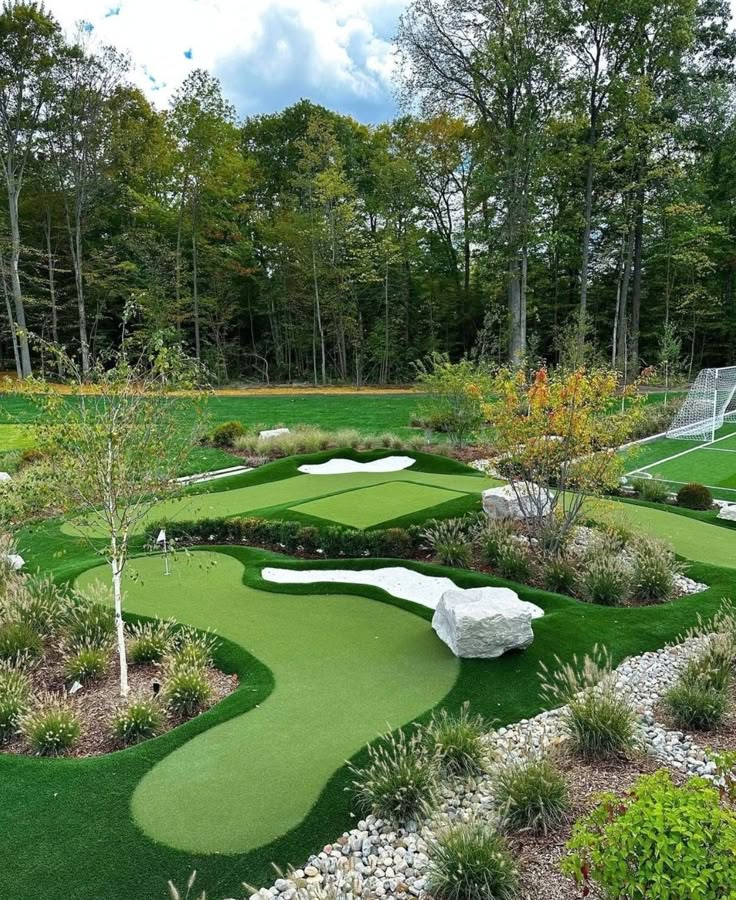


Lighting plays a subtle but powerful role in extending the use of the green into the evening pathway lights, subtle well lights, or small bollards can outline the edges and highlight breaks on the surface. The goal is enough illumination to play safely without washing out the relaxed atmosphere of the yard. When the green is integrated thoughtfully with plants, hardscape, and lighting, it becomes a natural part of the overall outdoor experience rather than a separate, isolated feature.
Furniture and Focal Points
A single statement piece of outdoor furniture, such as a sleek bench or a set of weather resistant chairs, anchors the green and gives you a place to rest between putts. Position a bench where you can line up a putt down the green, turning every spare moment into an informal practice session. Coffee tables or low side tables nearby offer a spot to keep scorecards, drinks, and a small chalkboard for tracking progress.
If your space allows, adding a small practice station with alignment sticks, tees, and a target hoop turns the green into a dedicated training area. You can also place a statue, bird bath, or flagpole near the cup to create a visual focal point that makes the green feel more like a miniature course. These touches keep the area engaging, support better technique, and ensure that the backyard putting landscape remains both functional and visually delightful.
Maintenance Tips and Long Term Value
Regular maintenance keeps your backyard putting green rolling true and looking sharp. For natural grass, this means consistent mowing at the correct height, light topdressing with sand, and occasional aeration to relieve compaction. Synthetic surfaces need brushing to keep fibers upright, rinsing to remove dust, and periodic infill checks to maintain proper ball response. Even paver systems benefit from occasional joint sand replenishment and pressure washing to keep the surface level.
A well designed green often increases curb appeal and overall property value, because buyers recognize the luxury and recreation potential it adds to the backyard. By choosing durable materials and smart layout, you reduce future repairs and create a space that ages gracefully. Routine care, planned irrigation, and thoughtful plantings around the edges ensure that your backyard putting landscape stays enjoyable, attractive, and ready for years of practice and entertainment.
As you plan your ideal outdoor space, think about how this green area can grow with your game and your lifestyle, inviting friends, family, and neighbors to enjoy a little hole in one right at home.
Related Articles
10 Stunning Putting Green Backyard Ideas for Golf Lovers
Creating a putting green in your backyard is one of the smartest ways to boost both the fun and the value of your outdoor space. Whether you dream of sinking...

10 Stunning Backyard Putting Green Ideas For A Pro-Like Course
Designing a backyard putting green turns a simple lawn into a personal training ground for precision and focus. Homeowners who love golf can practice their...

10 Stunning DIY Putting Green Ideas for a Pro-Like Backyard Oasis
Designing your own backyard putting green turns an ordinary piece of lawn into a year round practice area and a stylish outdoor retreat. Whether you want to...
10 Stunning Backyard Putting Green Design Ideas For 2024
Creating a backyard putting green turns a simple lawn into a personal sanctuary where you can practice your stroke and unwind after a long day. Whether your...

Stunning Sloped Backyard Landscape Design Ideas for Easy Transformation
Transforming a sloped backyard from a frustrating liability into a stunning, functional retreat is one of the most rewarding landscape design challenges...

Stunning Garden Landscape Ideas for Your Backyard Oasis
Creating beautiful garden landscape ideas backyard spaces is one of the most rewarding ways to enhance your home and daily life. Your outdoor area can become a...